Vaccinia immune globulin intravenous: quick answers
- What it is
- Human Immunoglobulin G
- Used for
- VIGIV (vaccinia immune globulin intravenous, human) is indicated for the treatment and/or modification of the following conditions:.
- Children
- Prescription
- Prescription medicine in the United States; rules differ by country.
From the official label (Dec 2025). Your prescription and pharmacist come first.
How to use Vaccinia immune globulin intravenous
What the official label says. If a doctor prescribed it, follow the prescription. Your pack's leaflet comes first if it is different.
Who it is for
VIGIV (vaccinia immune globulin intravenous, human) is indicated for the treatment and/or modification of the following conditions: • Eczema vaccinatum • Progressive vaccinia • Severe generalized vaccinia • Vaccinia infections in individuals who have skin conditions such as burns, impetigo, varicella-zoster, or poison ivy; or in individuals who have eczematous skin lesions because of either the activity or extensiveness of such lesions • Aberrant infections induced by vaccinia virus that include its accidental implantation in eyes (except in cases of isolated keratitis), mouth, or other areas where vaccinia infection would constitute a special hazard. …
How to take it and how often
- For intravenous use only. • For intravenous use only. • VIGIV is administered at a dose of 6000 Units per kg, as soon as symptoms for complication(s) due to vaccinia vaccination appear . • Higher doses (e.g. 9000 Units per kg or 24,000 Units per kg) may be considered in the event that the patient does not respond to the initial dose of 6000 Units per kg . • For patients with risk factors for thrombosis, the maximum daily dose of VIGIV should not exceed 12,000 Units per kg
- Dosage for Treatment of Severe Complications of Vaccinia Vaccination Administer VIGIV at a dose of 6000 Units per kg, as soon as symptoms appear and are judged to be due to severe vaccinia-related complication
- Consider repeat dosing, depending on the severity of the symptoms and response to treatment; however, clinical data on repeat doses are lacking
- Consider higher doses (e.g. 9000 Units per kg) if the patient does not respond to the initial 6000 Units per kg dose
- Doses up to 24,000 Units per kg administered to healthy volunteers were well tolerated in clinical trials [see 14 CLINICAL STUDIES ]
- Preparation • Bring VIGIV vials to room temperature prior to dosing. • If frozen, thaw vial by placing in a refrigerator at 2°C to 8°C (36°F to 46°F) until the contents are thawed for approximately 14 hours
- Product can be thawed rapidly by placing at room temperature for one hour followed by a water bath at 37°C (98.6°F ) until thawed. • Do not thaw this product in a microwave oven. • Do not refreeze the vial. • DO NOT SHAKE VIAL
- SHAKING VIAL MAY CAUSE FOAMING. …
Strengths it comes in
• Solution of gamma globulin (5% or 50 mg/mL) • 20 mL single-dose vial containing antibodies to vaccinia virus at ≥50,000 Units per vial Sterile solution available as 20 mL single-use vial containing a dose of ≥50,000 Units per vial ( 3 ).
Children
Safety and effectiveness in the pediatric population (
Older adults
Safety and effectiveness in the geriatric population (>65 yrs of age) has not been established for VIGIV.
While you are taking it
- Discuss the risks and benefits of VIGIV with the patient before prescribing or administration. • Inform patients of the potential for hypersensitivity reactions, especially in individuals with previous reactions to human immune globulin and in individuals deficient in IgA [see 4 CONTRAINDICATIONS and Hypersensitivity ]
- Advise patients to be aware of the following symptoms associated with allergic reactions: hives, rash, chest tightness, wheezing, shortness of breath, or feeling light headed or dizzy when they stand. …
Talk to a doctor first if
VIGIV is contraindicated in: • Isolated vaccinia keratitis. • Individuals with a history of anaphylaxis or prior severe systemic reaction associated with the parenteral administration of this or other human immune globulin preparations. • IgA-deficient patients with antibodies against IgA and a history of IgA hypersensitivity, as it contains trace amounts of IgA (40 mcg/mL). …
Medicines it may not mix with
• Efficacy of live attenuated virus vaccines may be impaired by immune globulin administration; revaccination may be necessary ( 7.1 ) • Antibodies in VIGIV may interfere with some serological tests ( 7.2 ) 7.1 Live, Attenuated Vaccines Immune globulin administration may impair the efficacy of live attenuated vaccines such as measles, rubella, mumps and varicella. Defer vaccination with live virus vaccines until approximately three months after administration of VIGIV. Revaccinate people who received VIGIV shortly after live virus vaccination three months after the administration of the VIGIV. …
Warnings
• Hypersensitivity to human immune globulin (acute anaphylaxis) ( 5.1 ) • Acute renal dysfunction/failure ( 5.2 ) • Thrombosis may occur with immune globulin products, including VIGIV. For patients at risk of thrombosis, administer VIGIV at the minimum dose and infusion rate practicable. Ensure adequate hydration in patients before administration. Monitor for signs and symptoms of thrombosis and assess blood viscosity in patients at risk for hyperviscosity ( 5.4 ) • Hemolysis or hemolytic anemia ( 5.5 ) • Aseptic meningitis syndrome (AMS) ( 5.6 ) • Noncardiogenic pulmonary edema [Transfusion-Related Acute Lung Injury (TRALI)] ( 5.7 ) • Transmission of infectious agents from human plasma ( 5. …
Possible side effects
The adverse drug reactions to VIGIV treatment in clinical trials (>10%) include headache, nausea, rigors and dizziness. The adverse drug reactions to VIGIV treatment in clinical trials (>10%) include headache, nausea, rigors and dizziness. ( 6 ) To report SUSPECTED ADVERSE REACTIONS, contact Emergent BioSolutions Canada Inc. at 1-800-768-2304 or FDA at 1-800-FDA-1088 or www.fda.gov/medwatch . 6.1 Clinical Trials Experience Because clinical trials are conducted under widely varying conditions, adverse reaction rates observed in the clinical trials of a drug cannot be directly compared to rates in the clinical trials of another drug and may not reflect the rates observed in practice. …
Pregnancy and breastfeeding
8.1 Pregnancy Risk Summary There are no data on the use of VIGIV in pregnant women to inform on drug-associated risk. Animal reproduction studies have not been conducted with VIGIV.
If you miss a dose
Take it when you remember, unless it is nearly time for the next dose. Then skip the missed one. Never take two doses at once to make up for it. Check your leaflet, as some medicines are different.
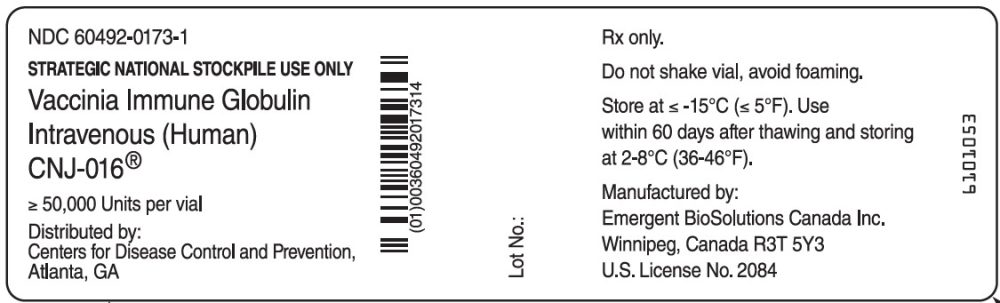
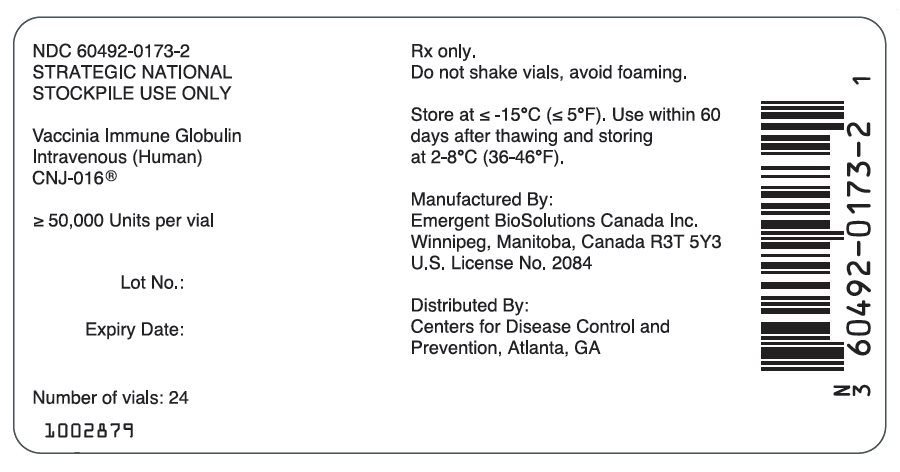
What Vaccinia immune globulin intravenous looks like
Compare with your pack. Packs differ between countries and makers; a pack that looks different is not always fake, so scan it to check the registration.
Brands around the world
Products with Vaccinia immune globulin intravenous as the active ingredient. Names differ between countries.
Registered products
United States (FDA)
Other countries: check your pack's registration number and we point you to your regulator.
Check your pack of Vaccinia immune globulin intravenous
Type the registration number on the pack, or scan it with your camera.
Questions about Vaccinia immune globulin intravenous
What is Vaccinia immune globulin intravenous used for?
VIGIV (vaccinia immune globulin intravenous, human) is indicated for the treatment and/or modification of the following conditions: • Eczema vaccinatum • Progressive vaccinia • Severe generalized vaccinia • Vaccinia infections in individuals who have skin conditions such as burns, impetigo, varicella-zoster, or poison ivy; or in individuals who have eczematous skin lesions because of either the activity or extensiven (From the official U.S. FDA label.)
How do I take Vaccinia immune globulin intravenous?
Follow your prescription or the leaflet in your pack. The official label says: For intravenous use only. • For intravenous use only. • VIGIV is administered at a dose of 6000 Units per kg, as soon as symptoms for complication(s) due to vaccinia vaccination appear ( 2.1 ). • Higher doses (e.g. 9000 Units per kg or 24,000 Units per kg) may be considered in the event that the patient does not respond to the initial dose of 6000 Units per kg ( 2.1 ). • For pa…
Do I need a prescription for Vaccinia immune globulin intravenous?
Usually yes. Vaccinia immune globulin intravenous is a prescription medicine in most countries. Rules differ by country.
What brands contain Vaccinia immune globulin intravenous?
Vaccinia immune globulin intravenous is sold under names such as Cnj-016. Brand names differ between countries.
What are the side effects of Vaccinia immune globulin intravenous?
The official label lists: The adverse drug reactions to VIGIV treatment in clinical trials (>10%) include headache, nausea, rigors and dizziness. The adverse drug reactions to VIGIV treatment in clinical trials (>10%) include headache, nausea, rigors and dizziness. ( 6 ) To report SUSPECTED ADVERSE REACTIONS, contact Emergent BioSolutions Canada Inc. at 1-800-768-2304 or FDA at 1-800-FDA-1088 or www.fda… Tell your doctor about any side effect that bothers you or does not go away.
Can children take Vaccinia immune globulin intravenous?
Safety and effectiveness in the pediatric population ( Always use the dose for the child's age or weight on the pack or prescription.
Can I take Vaccinia immune globulin intravenous when pregnant or breastfeeding?
8.1 Pregnancy Risk Summary There are no data on the use of VIGIV in pregnant women to inform on drug-associated risk. Animal reproduction studies have not been conducted with VIGIV. Ask your doctor or midwife first.
What medicines interact with Vaccinia immune globulin intravenous?
• Efficacy of live attenuated virus vaccines may be impaired by immune globulin administration; revaccination may be necessary ( 7.1 ) • Antibodies in VIGIV may interfere with some serological tests ( 7.2 ) 7.1 Live, Attenuated Vaccines Immune globulin administration may impair the efficacy of live attenuated vaccines such as measles, rubella, mumps and varicella. Defer vaccina… Use the free interaction checker before combining medicines.
How can I check that my Vaccinia immune globulin intravenous is genuine?
Scan the registration number on your pack with PillVera (NAFDAC number in Nigeria, NDC in the United States, DIN in Canada), check the expiry date and buy only from licensed pharmacies.
Sources
- U.S. FDA drug label (label of 16 Dec 2025)
- U.S. National Library of Medicine, RxNorm
- U.S. FDA National Drug Code directory
- WHO Medical Product Alerts
This page shows what official sources say, in plain words. It is not medical advice: your prescription and your doctor or pharmacist come first. Brand names, strengths and rules differ between countries.